

The most common reason is that humans are drawn to patterns and symbols. This is a chance to pause, reflect, celebrate and enjoy. To me, the Year of the Estonian Book is about people taking a moment to think about thinking – about how our ability to think is what sets us apart from other animals, and how, through thinking, we exist as human beings. In a narrower sense, the goal of the year is “to preserve books’ exalted place in Estonian life today and in the future.” The 500-year history of Estonian books gives us an opportunity to reflect on these themes as we mark this milestone anniversary. There will be exhibitions, conferences and other events throughout the year. With such a varied programme, people of all ages and interests will be able to share in the celebrations of the anniversary. Just as each person is different, the meaning and content of the Year of the Book will differ from one person to the next. For some, it could be reading a book; for others, attending a conference, visiting an exhibition or simply discovering something new and interesting.
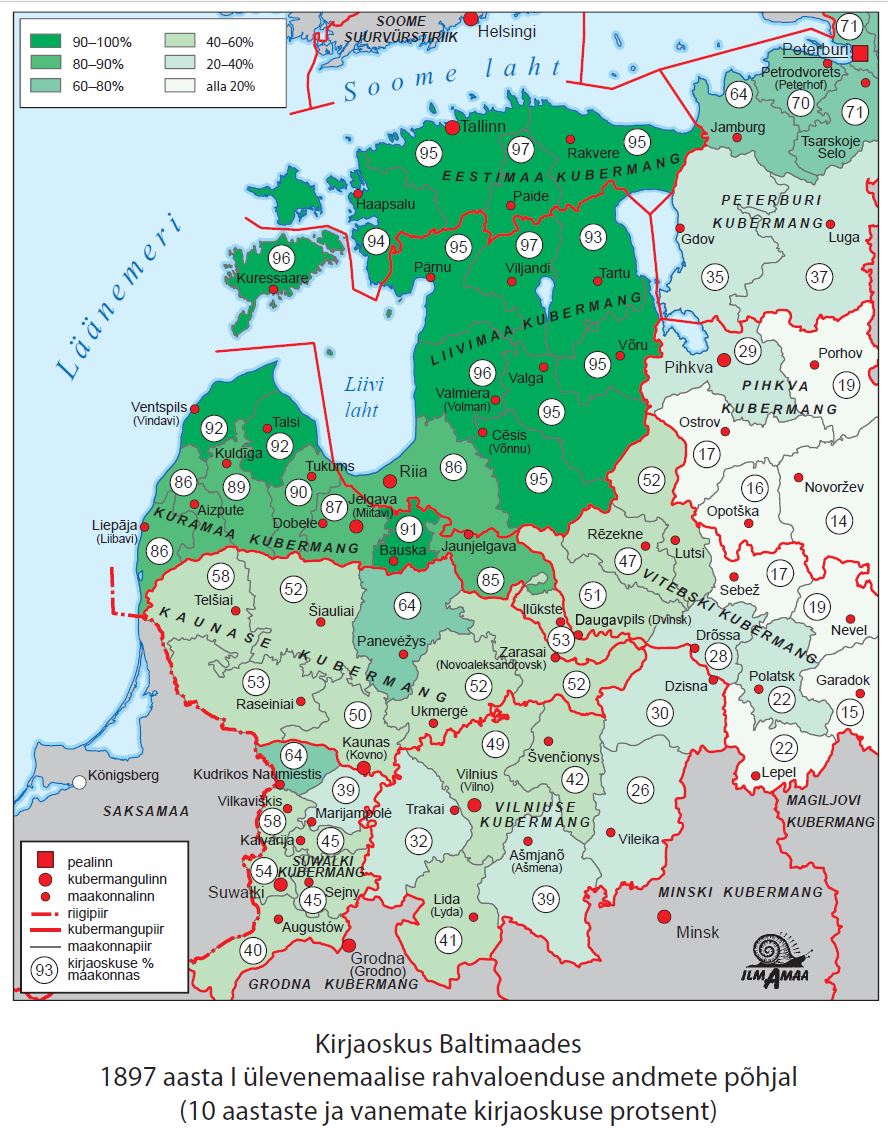
There has been a lot of talk lately about Estonia’s former Tiigrihüpe (Tiger Leap) programme and the need for a new digital leap. But just as we often forget that reading sheet music is another form of literacy, we tend to overlook what Estonia’s first ‘Tiger Leap’ was: the moment that Estonians became a literate people. Around 100 years after the first printed work in the Estonian language, public education began to take shape in the country. In 1641, the first Estonian alphabet book was published, followed later that century by books created by Forselius. In the early 18th century, the rise of the Moravian movement placed great emphasis on reading skills. The result can be seen on the map accompanying this text. By the end of the 19th century, Estonians were more literate than their neighbours, and thus more independent thinkers and decision-makers who aspired to greater freedom. This is worth remembering.
History of the Year of the Estonian Book
The initiative was launched by national leader Konstantin Päts, who recognising the scope of the anniversary, proclaimed 24 February 1935 – the 18th anniversary of the Republic of Estonia – as the Year of the Estonian Book, of which he became something of a patron.
To date, Estonia has celebrated four such years, the last of which is ongoing (which is to say it is happening). Let's briefly list their dates and (official) names.
24 February 1935-24 February 1936: Eesti Raamatu Aasta / Eesti Raamatu-aasta
24 February 1975-24 February 1976: Eesti Raamatu-aasta
23 April 2000-23 April 2001: Eesti Raamatu Aasta
30 January 2025-14 March 2026: Eesti Raamatu Aasta
Inspired by the Year of the Estonian Book in 2000, the Ministry of Culture began organising thematic years to highlight other cultural fields in 2005. Along the way, the Year of the Estonian Book 2000-2001 was retroactively added to this list – although, with its nearly 100-year history and cultural significance, it doesn’t quite fit the mould.
The role of the written word in Estonian culture
We know that the way of life of the Estonian people has changed a lot over time, as has the place and meaning of books. Yet they still hold a special role in Estonian culture. There are archetypes within which the role of books has endured and will continue to do so. Books are a powerhouse of the mind: they store knowledge that is important to us and that can be consulted even when computers are not working. Simply being in the company of good books can bring comfort, even if we’re not reading them.
The role of the written word in Estonian culture has been highlighted so many times that it is difficult to say anything original about it. During two previous celebratory years (1935 and 2001), different collected volumes were published under the same title, Raamatu osa Eesti arengus (The Role of the Book in Advancing Estonia). Personally, I hope that another book with the same title will be published this year – and even more so, that there will be a reason to talk about books’ role in Estonia’s development when the 1000th anniversary of Estonian-language books comes around.

